If you run a transportation business in Seattle right now, you're likely dealing with the same squeeze every owner feels. Fuel moves up, insurance rarely goes down, labor is tight, and customers still expect clean cars, on-time pickups, and calm service. Operating cost reduction matters, but cutting the wrong thing often creates bigger costs later in missed pickups, poor reviews, refunds, and dead time in the fleet.
The best operators don't treat cost control like panic mode. They treat it like system design. In a black car business, that means looking at what drives cost per trip, what creates waste behind the scenes, and which premium choices protect margin instead of hurting it.
A Proactive Approach to Operating Cost Reduction
A lot of owners start with the same reflex. Freeze spending. Delay hires. Shop for cheaper vendors. Push admin tasks onto whoever is available. That can buy a little time, but it rarely fixes the core problem.
The core problem is usually inconsistency. One week the airport runs are smooth and profitable. The next week traffic around SeaTac backs up, two drivers log too much idle time, a vehicle goes down for an avoidable repair, and dispatch spends half the day fixing schedule errors. Costs rise because the operation isn't controlled tightly enough.
The companies that get this right usually begin with management discipline, not a flashy tool. A McKinsey Global Survey found that 75% of targeted cost-cutting programs focused on operations, and the top-management support and clear targets were the two biggest factors in meeting cost goals, according to McKinsey's survey on what worked in cost-cutting.
Practical rule: Don't ask, “What can I cut?” Ask, “What creates cost without improving service?”
That question changes the whole playbook.
In a premium limo or black car business, some of the best savings come from doing a few things better, not doing everything cheaper. A trained chauffeur who follows the route plan, avoids wasteful driving, and handles a delay without causing a complaint can protect profit better than a lower-cost driver who creates rework. The same goes for dispatch, maintenance timing, and booking rules.
What proactive cost control looks like
A proactive approach usually has three parts:
- Clear targets: Set goals around trip profitability, vehicle use, overtime control, and service reliability.
- Fast feedback: Review issues weekly, not quarterly. Waste grows when nobody catches it early.
- Service-aware cuts: Protect the parts of the business customers pay for, like reliability, professional drivers, and smooth communication.
A transportation company can't slash its way into being premium. It has to remove waste while protecting trust. That's the difference between a short-term cut and a durable operating cost reduction plan.
Categorize Costs and Identify Quick Wins
Most owners know their biggest bills. Fewer can say which costs are fixed, which move with trip volume, and which sit in the middle. That matters because each type needs a different fix.
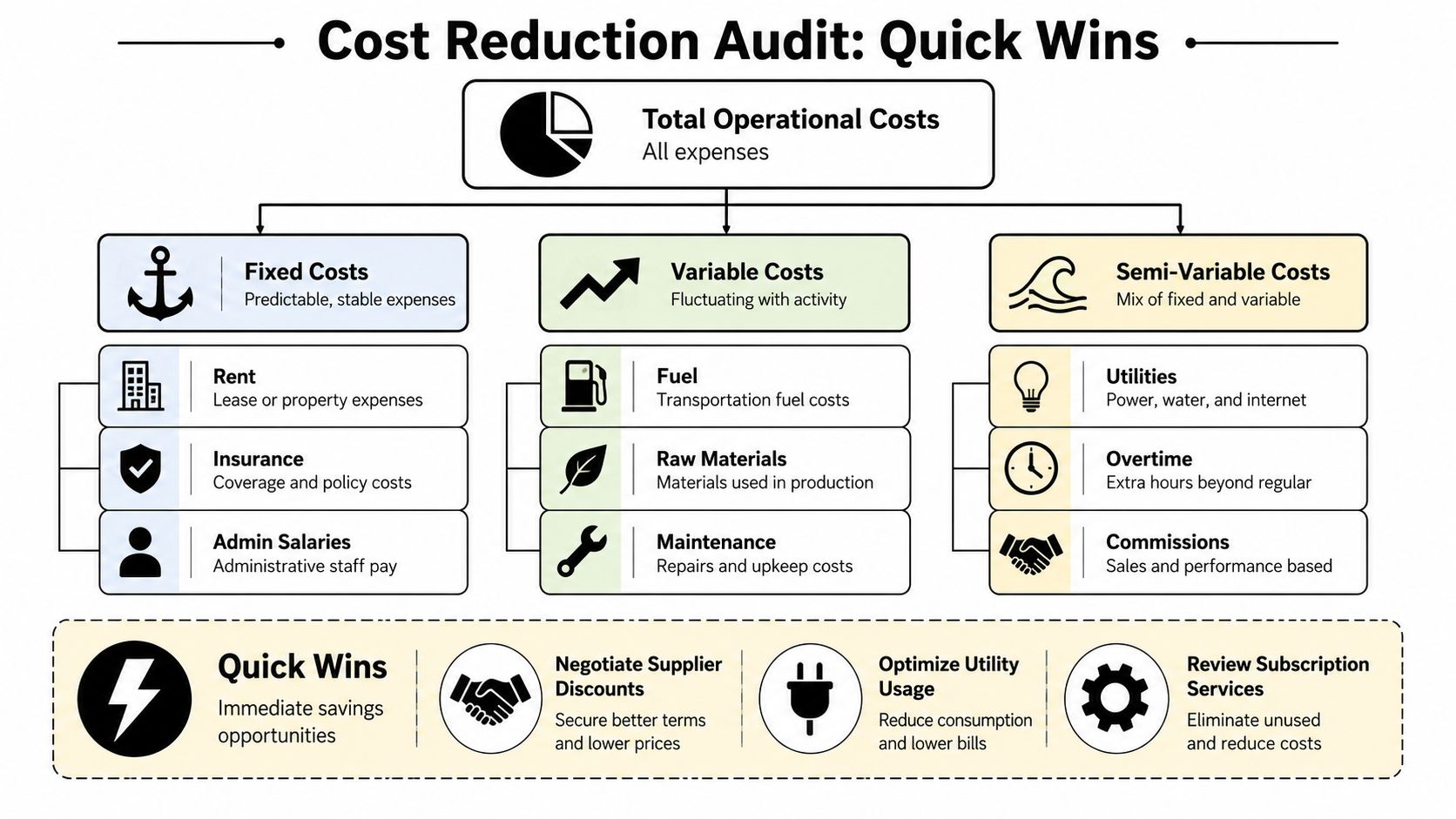
Start with a simple audit. Pull the last few months of expenses and sort every line into one of three buckets.
Fixed costs
These stay mostly the same even when ride volume changes.
Think office rent, base insurance premiums, admin salaries, software platforms with flat monthly fees, and vehicle loan payments. These costs won't disappear because bookings slow down for a week.
Variable costs
These rise and fall with activity.
Fuel is the obvious one. So are tolls, trip-linked cleaning, wear on tires and brakes, and some maintenance items tied to miles driven. In a limo business, these are often the fastest place to find waste because they show up every day.
Semi-variable costs
These have a base cost, then climb when demand rises.
Chauffeur overtime fits here. So do utilities, after-hours dispatch coverage, and some customer service tools that charge more as usage grows. This category is where many owners lose control because the spend feels justified in the moment but keeps creeping upward.
If you can't sort a cost into one of those three buckets, you probably don't understand it well enough to manage it.
A helpful reference for owners cleaning up back-office spend is Jumpstart Partners on operating expenses. It's useful for thinking through which admin and support costs belong in the operating expense bucket versus direct service delivery.
Quick wins you can act on this week
You don't need a full overhaul to start saving money. A few small controls can show results fast.
- Review every subscription: Dispatch tools, CRM add-ons, extra phone lines, scheduling apps, and duplicate reporting tools tend to pile up over time.
- Set an anti-idling rule: Drivers should know when idling is necessary and when it's just fuel burn.
- Tighten communication on efficient driving: Clear reminders on smooth acceleration, braking, and route discipline help reduce waste before you invest in more advanced systems.
- Check underused vehicles: A vehicle that sits too often still carries fixed costs.
- Match vehicle type to trip type: Don't send a larger vehicle when a smaller one fits the job and service standard.
A simple audit table
| Cost type | Common black car examples | Best first action |
|---|---|---|
| Fixed | Insurance, rent, admin pay, loan payments | Renegotiate contracts and remove duplicate tools |
| Variable | Fuel, tolls, trip cleaning, wear items | Reduce waste per trip and improve driving habits |
| Semi-variable | Overtime, support coverage, utility overage | Add scheduling controls and demand planning |
Route-level review also helps. If you run long-distance bookings, compare actual trip cost against expected time, fuel, and vehicle use. This is especially useful when pricing special routes such as Seattle to Spokane car service, where distance, deadhead time, and return planning can change margin quickly.
Optimize Your Fleet and Fuel Management
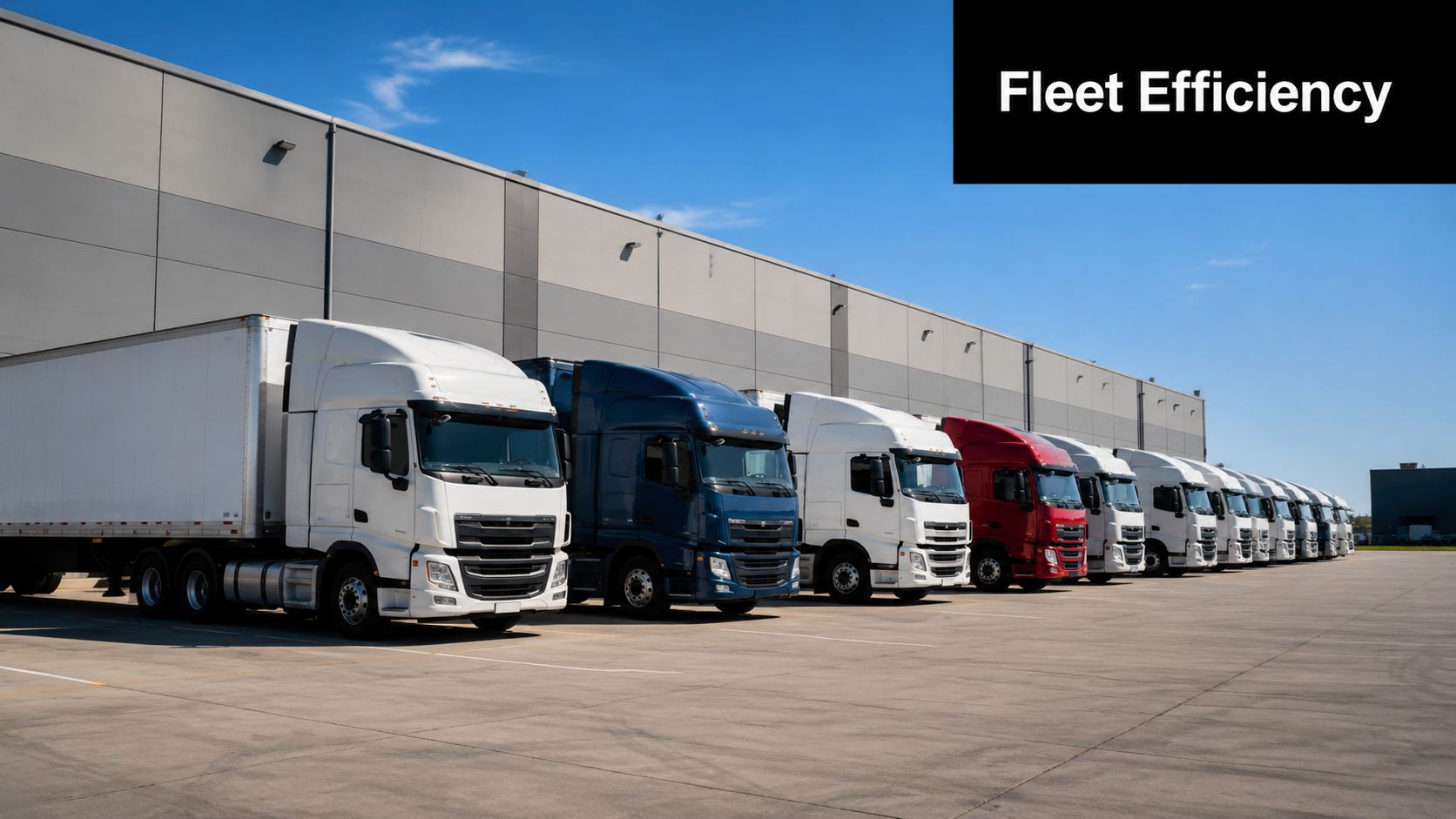
Fleet cost is where operating cost reduction gets real. The vehicles make the money, but they also absorb a huge share of the spending. If the fleet isn't managed tightly, profit leaks out through downtime, inefficient driving, poor routing, and repairs that should have been prevented.
Predictive maintenance beats reactive repair
Waiting until a vehicle breaks is one of the most expensive habits in transportation. The direct repair bill hurts, but more significant damage often comes from schedule disruption, emergency substitutions, customer frustration, and lost driver time.
A better model is to maintain vehicles by mileage, usage pattern, and known wear points. Black car fleets don't all operate under the same conditions. Airport runs, downtown hotel pickups, and long highway transfers create different stress on brakes, tires, fluids, and idle-heavy systems.
For owners who want a practical service framework, My Safety Manager's fleet maintenance strategy is a useful example of how to structure preventive maintenance intervals and checks.
Fuel management starts with behavior
Fuel cost feels external because owners can't control pump prices. But they can control fuel waste.
According to Unico Taxi's guide to cutting limo business costs, implementing predictive analytics and fleet tracking technology can reduce operating costs by 15–20%, and companies that monitor and train drivers to eliminate sharp braking and rapid acceleration can save up to $3,500 annually per vehicle.
That's why fuel management isn't just about buying fuel cheaper. It's about reducing the behaviors that burn it unnecessarily.
- Monitor idle time: Airport staging, hotel waits, and early arrivals can create silent fuel drain.
- Track harsh driving events: Fast starts and hard stops waste fuel and add wear.
- Set practical driver rules: Things like shutting off unnecessary systems when parked and following approved routes matter.
- Review route timing: Heavy traffic around SeaTac, downtown Seattle, and cruise terminals can wreck an otherwise good day if trips are scheduled too tightly.
Smooth driving lowers two costs at once. Fuel and maintenance.
Route optimization is not optional
In premium transportation, route planning has to balance speed, customer comfort, and predictability. The cheapest route on paper isn't always the best route if it adds stress, uncertainty, or a higher chance of being late.
What works is a repeatable routing process:
- Build preferred routes by trip type.
- Flag congestion windows.
- Give dispatch authority to adjust early.
- Review trip data after problem runs.
This matters even more in airport and event traffic. If dispatch doesn't build buffer time around known choke points, drivers either rush or arrive late. Both outcomes cost money.
Know when the fleet mix is wrong
Not every cost problem is a management problem. Sometimes the vehicle mix is off. If too many large vehicles handle smaller jobs, cost per trip rises. If the fleet is too small or too specialized, scheduling gets messy and expensive.
A quarterly review of your actual bookings against your active units will show whether you've got the right balance. If you want a benchmark for how a professional black car fleet can be structured across trip types, review a sample chauffeured fleet lineup. The key lesson is simple: fit the vehicle to the work, not the ego of the business.
Rethink Your Staffing and Vendor Contracts
A lot of cost advice pushes owners toward cheaper labor and more outsourcing. That sounds efficient until the hidden bills show up. In a transportation business, bad handoffs, weak training, inconsistent service, and poor accountability create costs you won't see in payroll at first glance.
That's why staffing strategy is a cost strategy.

The hidden cost of low-control labor
Premium transportation runs on trust. Customers expect the car to be clean, the chauffeur to be professional, the pickup to be smooth, and the details to be handled without friction. When operators rely too heavily on contractors or gig-style labor, they often lose consistency right where customers notice it most.
According to Cloudvara's cost reduction analysis, companies that retain in-house, vetted staff achieve 25% lower error rates than those using outsourcing or gig labor. The same source notes that many automation-first models ignore 30-50% operational waste from outsourced errors.
That should get an owner's attention. A lower hourly rate doesn't mean a lower total cost if it creates rework, refunds, churn, or damage to the brand.
When paying more saves more
Many new operators often get the math wrong. They compare payroll only. They don't compare total operating impact.
A well-managed in-house chauffeur team usually gives you:
- Stronger accountability: Drivers follow your standards because they work inside your system.
- Better customer continuity: Repeat riders often value familiar service and predictable quality.
- Lower rework: Fewer wrong pickups, less confusion, fewer service recoveries.
- Cleaner scheduling: Dispatch has better control over availability and performance.
If you're building a hiring model around reliability instead of short-term labor flexibility, a page like chauffeur hiring and standards shows the kind of structure serious operators tend to use.
Cheap labor becomes expensive when dispatch spends the day fixing preventable mistakes.
Vendor contracts deserve the same discipline
Owners often review labor closely but ignore vendor creep. Insurance brokers, detail vendors, phone systems, software providers, and cleaning partners all affect operating cost.
Use a simple decision test for every vendor:
- Is the service reliable?
- Is the pricing still aligned with value?
- Are we paying for features or capacity we don't use?
- Does this partner reduce work for our team or create more of it?
A quick comparison
| Option | Short-term appeal | Long-term risk |
|---|---|---|
| Gig or contractor-heavy model | Flexible labor spend | Less control, more service variation |
| In-house trained staff | Higher visible payroll | Better consistency and fewer service errors |
| Cheap vendor contracts | Lower monthly invoice | More issues, slower fixes, hidden admin load |
Labor and vendor cost should be judged by total system effect. If a partner makes the operation calmer, cleaner, and easier to run, that's real value. If they create friction, they are not really saving you money.
Leverage Smart Pricing and Automation
Some owners treat pricing as separate from operating cost reduction. It isn't. Pricing affects forecast accuracy, customer behavior, admin workload, and the number of disputes your team has to handle.
Flat, predictable pricing often does more than help sales. It also reduces friction inside the business. Customers understand what they'll pay. Dispatch has fewer fare disputes. Accounting can forecast more cleanly. Repeat clients know what to expect.
That matters because many operators still focus only on short-term cuts. According to Fora Financial's 2025 business trends overview, 54% of businesses cut operating expenses to counter inflation, but few have a framework to measure the return from premium service attributes such as flat-rate pricing or on-time guarantees.
Why premium service features can lower cost
An on-time promise, clean booking terms, and consistent fare structure can reduce the mess that eats margin. They can lower customer complaints, reduce refund pressure, and make repeat business easier to keep.
That doesn't mean every premium promise makes financial sense. It means owners should test whether the promise reduces failure points. If it does, it may be part of the cost strategy, not just the marketing.
Use automation where it removes friction
Back-office automation works best when it supports people instead of replacing judgment. In a transportation company, that usually means integrating booking, dispatch, payment, CRM, and driver communication so the same trip details don't get entered again and again.
A useful rule is simple. Automate repetitive tasks. Keep human control over service recovery, schedule judgment, and high-value customer communication.
For example, if missed calls are costing bookings after hours, a tool category like virtual receptionist for contractors can help owners think through how call handling may reduce admin drag without removing human oversight from critical bookings.
You can see the pricing side of this idea in action when comparing private car models against rideshare volatility. A route-by-route analysis like Seattle limo versus Uber pricing differences shows why stable pricing can simplify both buyer decisions and operator planning.
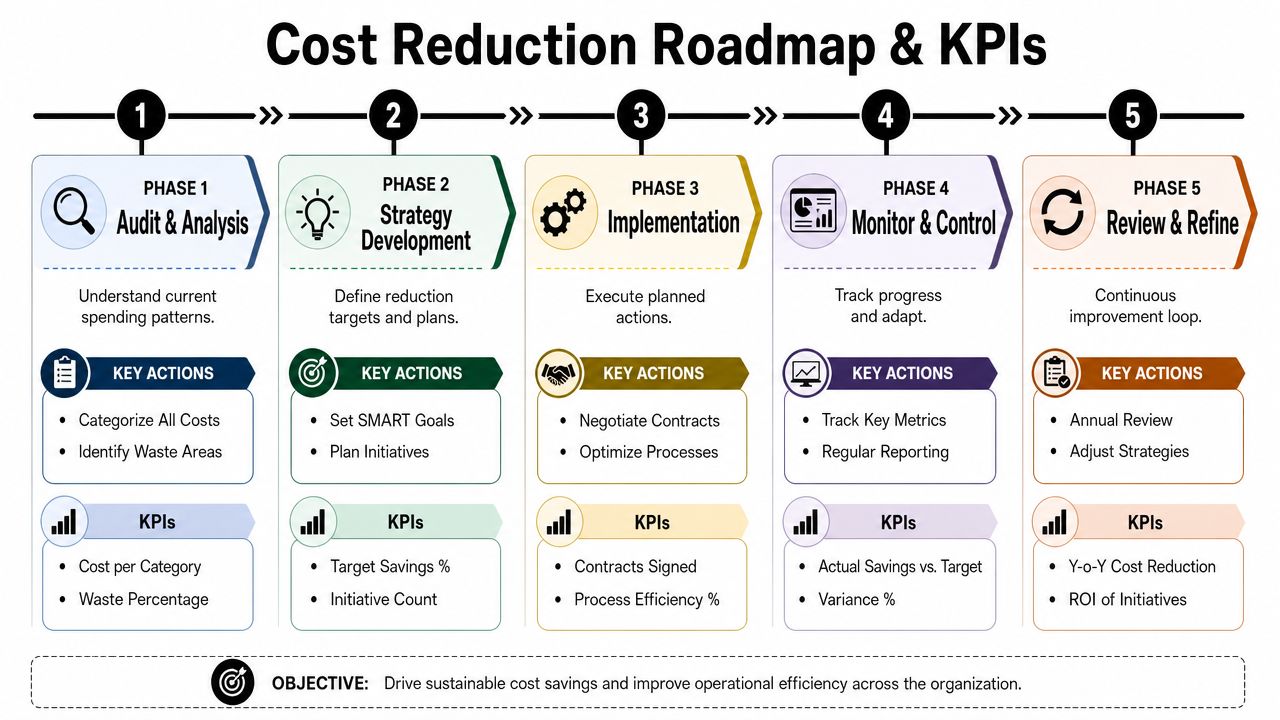
Create Your Cost Reduction Roadmap and KPIs
Most cost plans fail because they stay abstract. Owners talk about waste, efficiency, and better systems, but nobody owns a timeline. A simple roadmap fixes that.
A practical 90-day sequence
Month one should focus on visibility. Audit costs, sort them into clear categories, review underused subscriptions, and identify the trips or vehicles that create the most friction.
Month two is where systems start to change. Install or tighten telematics, update driver rules, create route standards for common runs, and set weekly review habits for dispatch and maintenance.
Month three should push into contract and staffing cleanup. Review vendor pricing, tighten service standards, and make sure everyone understands the cost target and how their work affects it.
The KPIs worth tracking
Don't track everything. Track the numbers that change behavior.
- Cost per mile: This gives you a clean view of fleet efficiency over time.
- Vehicle utilization rate: You need to know which units are productive and which sit too often.
- Overtime trend: Rising overtime often signals schedule problems, not just demand.
- Service recovery count: Track how often your team has to fix a preventable issue.
- Customer acquisition cost: If poor service causes churn, this number rises because you keep replacing lost customers.
The best KPI is the one that tells a supervisor what to fix this week.
Airport work is a good place to start measuring because it exposes scheduling, wait time discipline, traffic planning, and vehicle readiness all at once. Reviewing airport car service operations around SeaTac can help owners think through which trip types deserve the tightest controls.
A good operating cost reduction plan should make the business calmer. Cleaner schedules, fewer preventable mistakes, steadier margins, and stronger service usually show up together. If your cost cuts make the operation harder to run, they aren't real savings.
If you want a transportation partner that understands cost control without cutting service, All Black Limo LLC is a strong example of that model in practice. For airport transfers, corporate rides, cruise pickups, and private black car service in the Seattle area, you can review booking options online and see how a premium, flat-rate approach supports both reliability and long-term value.