You land at SeaTac, get off the plane, and think the hard part is over. It isn’t. The main decision starts at baggage claim, when you have to choose between the train, the taxi line, the rideshare garage, a shuttle, or a pre-booked car.
For most travelers, transportation from seattle airport to downtown comes down to one question: do you want the lowest price, or the least friction? Those are not the same thing at SEA. I’ve seen people save money on paper and lose it back in time, stress, missed pickup confusion, and bad routing with luggage in tow.
The first thing I tell first-time clients is usually the part they didn’t expect to hear. The drive itself is not the hard part. The handoff is. The issue is rarely the 13-mile trip. It’s what happens before the car moves: where your pickup is, whether your driver is there, whether your app fare jumps, whether you’re dragging bags to a platform, and whether downtown drop-off is simple at your hotel or office.
One of the more common stories I hear from people who switch from app-based pickup is some version of this: they landed late, opened the app, watched the fare rise while they walked, got sent to the parking garage, then had a driver cancel after they were already standing outside with luggage. That’s not rare airport friction. That’s what a lot of travelers are trying to avoid.
Table of Contents
Navigating Your Arrival Seattle Airport to Downtown
You land at SEA on time, then lose 25 minutes after the flight. Bags are slow, the rideshare pickup zone is backed up, and the rate in your app has climbed while you were still at baggage claim. That is the part generic airport guides miss. The trip to downtown is rarely decided by mileage alone. It is decided by how much uncertainty you can absorb after landing.
If you are comparing options before arrival, this SeaTac airport transportation service page shows what a pre-arranged pickup includes and what you still have to handle yourself at the airport.
The choice usually comes down to friction
Different travelers need different things, and I see that every week. A solo flyer with one carry-on can tolerate a train platform, a short walk, and a few extra minutes. A family with strollers and checked bags usually cannot. A business traveler heading straight to a meeting may care less about saving twenty dollars than avoiding one missed call, one pickup delay, or one drop-off a block away in the rain.
That is the primary distinction at SEA. Cost matters, but reliability usually matters more once the plane is on the ground.
The train works well for light luggage and a destination near a station. Taxis are straightforward if you want the next available car and do not want to deal with an app. Rideshare works when demand is normal and the pickup area is moving. Shared shuttles fit travelers who accept extra stops and loose timing. Private car service costs more up front, but it removes the biggest variables.
The wrong airport transfer usually does not look wrong until you are already waiting for it.
What travelers underestimate at SEA
Travelers often compare base fare and stop there. At this airport, the operational details decide whether the ride is easy or expensive in practice.
A cheaper option can turn into the longer, harder trip once you add baggage claim delays, pickup-zone congestion, hotel access issues, and the last stretch on foot with luggage. That last part catches people off guard downtown, especially if the car stops where traffic staff allow, not where your entrance is.
Group arrivals have their own failure points. One person’s delayed bag can leave the rest of the party standing at the curb. Two rideshares for six people can separate the group and create two different arrival times. A shared shuttle may save money on paper, then burn it back in time lost waiting for other passengers.
Choose based on what can go wrong, not just on the posted price. That is usually the difference between a cheap ride and a dependable one.
Seattle Airport to Downtown A Quick Comparison
You land at SEA at 4:45 PM, clear baggage claim, and need to be downtown for a 6 PM dinner or check-in. On paper, several options look close. In real airport operations, they are not close at all. The gap usually shows up in curb wait time, pickup confusion, surge pricing, and how many handoffs you deal with before you reach the hotel door.
SEA sits south of downtown, and the trip can be quick or slow depending on traffic, arrival volume, and how your ride is dispatched. Light rail is the low-cost, predictable choice if your luggage is manageable and your destination is near a station. Car-based options are more direct, but the primary difference is reliability under pressure, not just the posted fare.

Travelers weighing app pricing against a scheduled car should review this Seattle limo versus Uber price comparison guide before they book a peak-hour pickup.
At a glance by cost and effort
SEA Airport to Downtown Seattle Transportation Options (2026)
| Method | Typical Cost | Total Travel Time | Best For |
|---|---|---|---|
| Link Light Rail | Low fixed fare | Usually the most consistent | Solo travelers with light luggage and a station-friendly destination |
| Rideshare | Mid-range, but can spike hard | Unpredictable at busy pickup times | Travelers willing to accept price swings and curbside delays |
| Airport Shuttle | Lower upfront cost per person | Often the longest overall trip | Budget travelers who can tolerate shared routing |
| Private Car | Higher booked price, fixed in advance | Direct and scheduled | Business travelers, families, executives, and groups that need one coordinated arrival |
What the table misses
The table does not show failure points.
Rideshare looks simple until the pickup lot backs up, the driver cancels, or the app reprices while you are still waiting on bags. Taxis remove the app problem, but availability still changes with flight banks and weather. Shared shuttles can work for a single traveler with time to spare, yet they become inefficient fast once multiple hotel stops are added.
For business travelers and groups, the hidden cost is usually not the fare. It is the missed meeting, the split arrival, the extra wait at the curb, or the confusion of managing several people with different bags and different phones. That is why experienced travelers often judge airport transportation from Seattle airport to downtown by one metric first: how many things can go wrong between baggage claim and the hotel entrance.
The Most Affordable Ride Using the Link Light Rail
The Link Light Rail is the cleanest budget answer for transportation from seattle airport to downtown. It’s been connecting SEA to downtown since December 19, 2009, and the extension cut airport-to-downtown transit time from more than 60 minutes by bus to a consistent 38 minutes by rail, according to this Seattle airport to downtown transit overview.
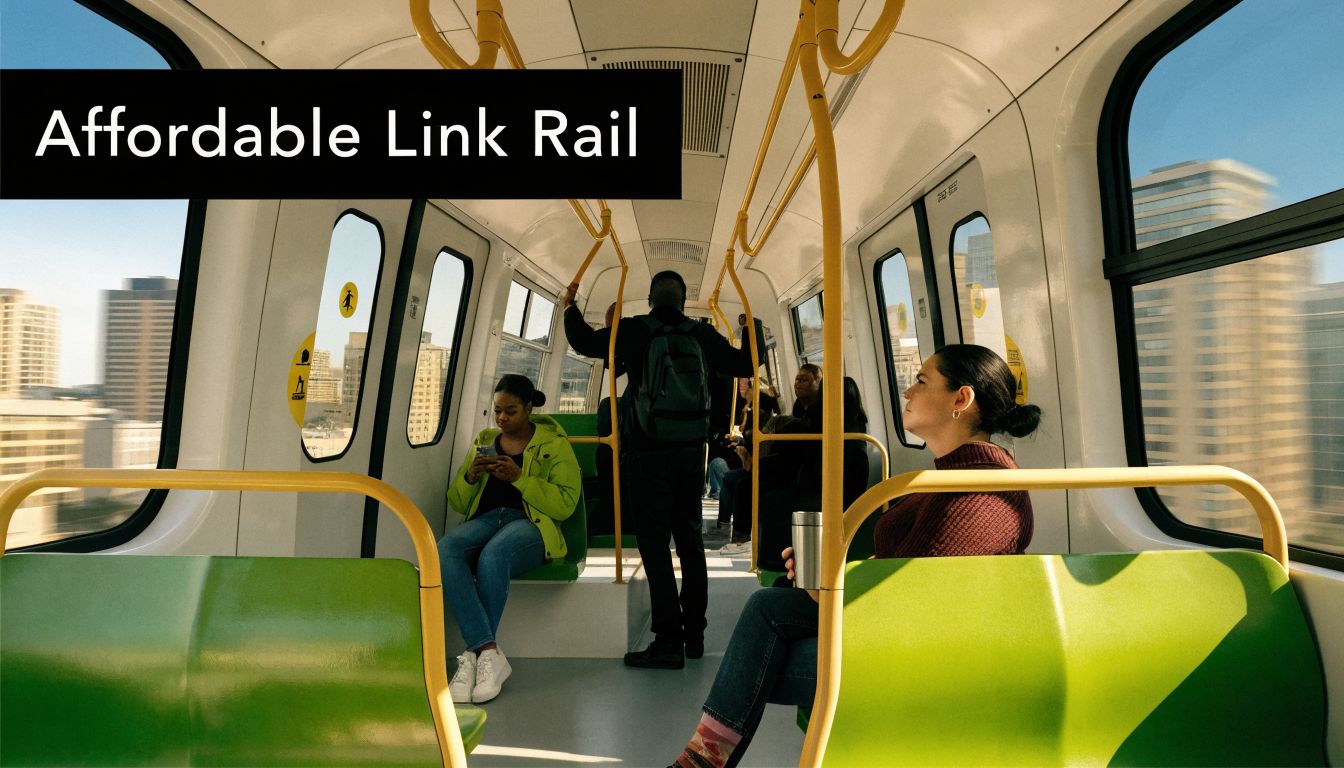
If your priority is lowest cost, this is the option to beat. Adult fare is $3.25 one way, trains run every 8 to 12 minutes, and service operates daily from 5 AM to 1 AM, based on the verified SEA transit data already established earlier.
Who should use it
The light rail makes sense for a traveler who checks most of these boxes:
You’re traveling light: One roll-aboard and a backpack is manageable.
Your downtown stop is station-friendly: Westlake and nearby core areas are easier than a hotel with a long uphill or multi-block walk.
You don’t need curb-to-curb service: You’re comfortable handling the last part on foot or with a short second ride.
You’re landing within rail service hours: If your arrival drifts late, your options narrow.
That’s why the train is popular with experienced solo travelers. They know exactly where they’re going and they’re prepared to move themselves through the final leg.
Practical rule: If you’re already tired, carrying checked bags, and still need to navigate downtown sidewalks, the cheapest option may stop feeling cheap.
Where it works and where it gets harder
The train avoids road traffic entirely. That is its biggest strength. If I-5 is stacked up, the rail still runs on its own schedule.
Where the train gets harder is not the ride itself. It’s the airport walk to the station, then the downtown exit, then the final blocks to your hotel, office, or meeting. That part matters more than most online guides admit, especially in rain, late at night, or with luggage.
A good primer on lower-cost airport options is this affordable airport transportation guide.
If you want a visual of the rail trip and station flow, this helps:
For business travelers, families with strollers, or anyone carrying more than basic luggage, the train is usually the right answer only when budget is the main decision driver.
Taxis vs Rideshare Convenience at a Variable Cost
People group taxis and rideshare together because both are car-based, but the airport experience isn’t the same. One is a line. The other is a process.

Taxi stand versus app pickup
At SEA, taxis are straightforward. You follow signs to the taxi area and take the next available car. The cost is higher than rail, but the process is simpler than waiting for an app driver to accept, get to you, and locate you.
Verified fare ranges put taxis around $55 to $70 flat rate for the downtown corridor, while rideshares average $45 to $100+ depending on demand, based on the verified transit summary from earlier source material.
That doesn’t mean taxis are always faster. It means they’re often simpler when you’ve just landed and want to reduce variables.
Why rideshare feels easy until it doesn't
Rideshare is popular because everyone already has the app. The problem is that airport pickup demand is concentrated and unpredictable. Verified 2025 reporting tied to Port of Seattle data and rider forums shows average rideshare waits of 15 to 25 minutes during peak windows of 7 to 9 AM and 3 to 6 PM, with fares spiking 50 to 100%, according to this SEA rideshare reliability discussion.
That lines up with what travelers complain about in practice. The app shows one price at baggage claim, another by the time you get to pickup, and then you’re still waiting in the garage hoping the driver doesn’t cancel.
A lot of first-time visitors assume rideshare is always the middle-ground answer. At SEA, it can be. But it can also be the most irritating option if you land during a rush window, after weather disruptions, or when multiple flights dump passengers into pickup demand at once.
Downtown drop-offs that catch travelers off guard
The downtown part is where visitors often get surprised. Not every hotel has a simple front-door pull-through. Some office buildings have awkward loading patterns, bus traffic, or curb restrictions that force quick unloads.
The roughest downtown timing is usually the late afternoon corridor, especially when traffic from the airport meets downtown congestion. During that window, drivers who know the city don’t just stare at the app reroute. They decide early whether I-5 is worth it or whether SR-99 gives a cleaner approach into the core.
A few drop zones also create unnecessary friction for unprepared drivers. Hotels near Pike Place, office towers near Westlake, and convention-area properties can look easy on a map and be annoying at curb level. Travelers usually don’t know that until they’re trying to unload in active traffic.
If your ride plan depends on perfect timing, rideshare is the wrong place to gamble.
For a traveler with time flexibility, rideshare can still be fine. For a traveler with a dinner reservation, board meeting, cruise check-in, or tired kids in the back seat, variable pickup and variable pricing are much harder to justify.
The Shared Ride Compromise Airport Shuttles
Shared shuttles sit in the middle of the market and often disappoint both kinds of travelers. They aren’t as cheap as the train, and they aren’t as direct as a private vehicle.
Why the price can be misleading
The pitch is easy to understand. You pay per person, get picked up at the airport, and let someone else do the driving. Verified pricing puts shared shuttles around $18 to $45 per person, but trip times can stretch from 30 to 90 minutes because of multiple stops.
That’s the trade many travelers regret after landing. The direct drive to downtown may be short, but your ride is only direct if everyone else happens to be going where you’re going. They usually aren’t.
The common operational problem is stop stacking. A shuttle may leave the airport on time and still take far longer than expected because passengers are being dropped at several hotels before yours.
When shuttles make sense
Shuttles are workable in a narrow set of situations:
You’re traveling alone and cost matters more than schedule
You don’t mind sharing space with other passengers
Your arrival is flexible and you’re not headed straight into a meeting or event
Your hotel is on a common drop sequence
For groups, shuttle math often falls apart. Once several people are paying separately, the per-person savings can shrink while the coordination hassle grows.
A useful comparison of those trade-offs appears in this SeaTac shuttle service guide.
The most common mistake groups make is trying to self-coordinate with separate rides or multiple shuttle bookings to save money. What they usually create instead is staggered arrivals, split luggage, and one person texting everyone else from the hotel lobby asking where they are.
The Executive Choice Private Car Service for a Guaranteed Arrival
Private car service exists for travelers who don’t want to manage airport uncertainty after landing. The value isn’t just the vehicle. It’s the structure around the pickup.
Verified comparison data notes that professional black car services operate with a 99.9% on-time rate, often backed by a guarantee, while shared shuttles can run 25 to 45 minutes before additional hotel-stop delays and rideshares remain dependent on driver availability, as described in this airport shuttle and black car comparison.
How a pre-booked airport pickup works
A proper airport car service should include flight tracking, a defined pickup process, and a confirmed rate before you travel. For the SEA to downtown run, the practical benefit is that you’ve settled the hard part before your plane lands.
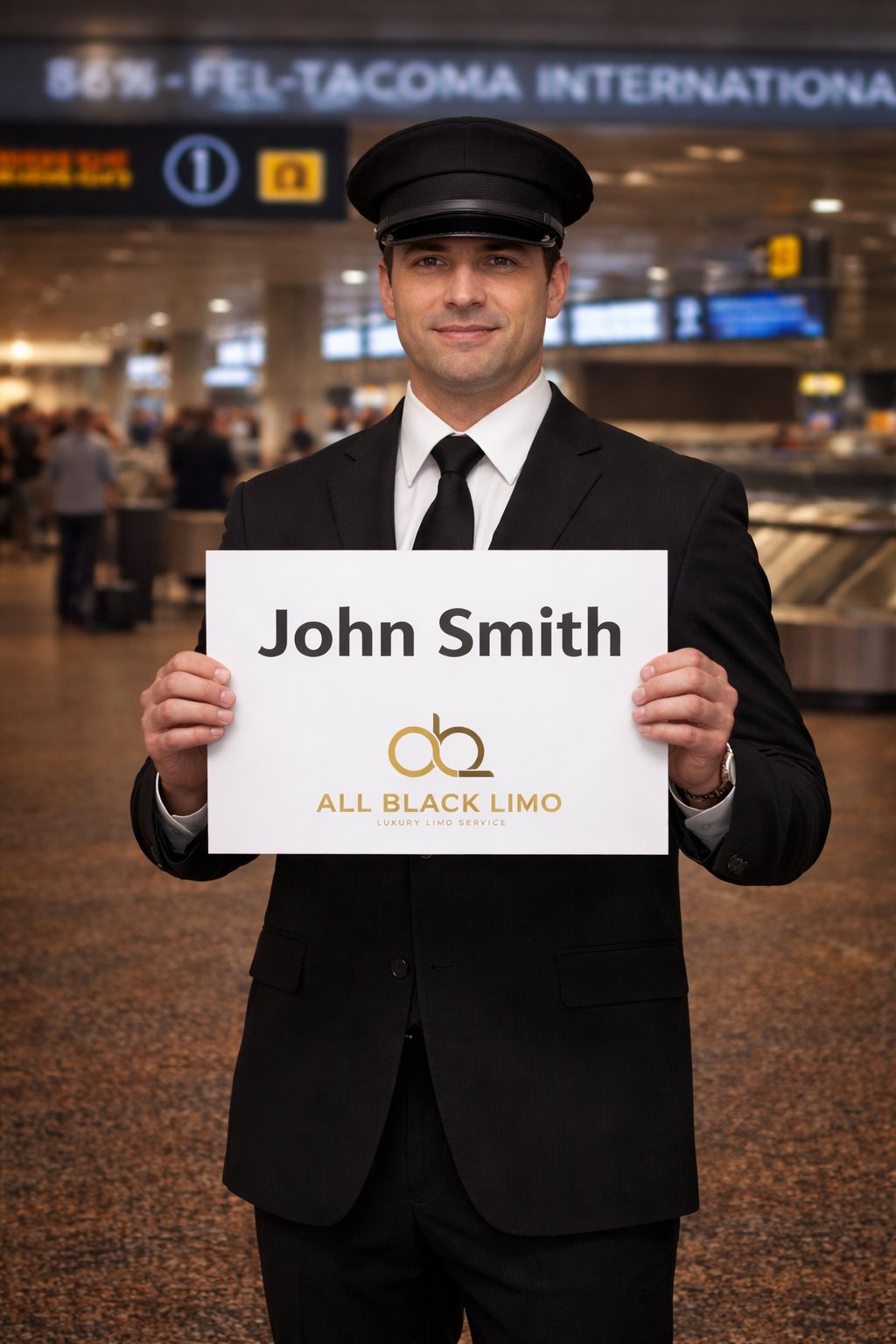
With premier black car service, the setup is factual and simple: the trip is pre-booked, the chauffeur tracks the incoming flight, and pickup is handled at baggage claim with direct service to the downtown address on the reservation.
That’s why business travelers book this category. They aren’t paying for surprise. They’re paying to remove it.
When each vehicle type makes practical sense
For the first 18 miles, the pricing shared by the company is flat-rate, which covers the SEA to downtown corridor.
Sedan at $129: Good fit for one traveler or two passengers with light luggage. For a business trip, this is the cleanest upgrade from app-based pickup because the price is known before arrival.
SUV at $159: Better when checked luggage is part of the equation. Families, longer-haul arrivals, and travelers carrying more gear usually find the extra room worth the small step up.
Sprinter Van at $299: For groups, the focus shifts from luxury to operational considerations. One vehicle, one pickup, one arrival time.
For larger groups, the Sprinter becomes the obvious practical choice faster than people expect. Once a group is trying to keep several passengers, several bags, and one schedule together, one van is usually easier than multiple cars.
One coordinated pickup beats three separate arrival stories.
If you’re traveling beyond downtown after arrival, the company also maintains service pages for routes like Gig Harbor limo service and a fleet and pricing booking page where vehicle fit matters more than generic airport transfer advice.
What changes during major event periods
The airport-to-downtown run gets harder when the city calendar is crowded. Big conventions, cruise turnover, and stadium traffic compress vehicle availability across the market. During those periods, app-based rides become less predictable and group mistakes become more expensive.
The summer event pattern has already changed the kinds of questions travelers ask. They’re not just asking about “how much to downtown.” They’re asking whether one reservation can handle airport pickup, downtown hotel drop-off, and then a later transfer to the cruise terminal. With expanded cruise activity and more event-driven travel, that combined itinerary is becoming more common.
That’s also where pre-booking matters most. The client who waits until landing is shopping for whatever is left. The client who books ahead is choosing based on need.
Need a ride to or from SeaTac this week? Book at allblacklimoseattle.com or call 206-672-8281.
Choosing Your Best Option A Traveler's Decision Guide
A lot of airport advice fails because it treats every traveler the same. Seattle doesn’t work that way, and SEA certainly doesn’t.
The simple way to decide
Choose based on what you can comfortably manage after you land.
If you’re a solo traveler on a tight budget, the Link Light Rail is the logical answer. It keeps cost low and avoids road traffic. It works best when you’re carrying light luggage and your destination is easy from the station.
If you’re a business traveler, certainty usually matters more than the lowest fare. A direct pre-arranged pickup removes too many variables to ignore, especially when the ride is attached to a meeting, event, or client schedule.
If you’re traveling as a family, think less about fare and more about effort. Bags, tired children, car seats, and a downtown unload change the equation quickly. Door-to-door service gets more valuable when nobody in your group wants another transfer.
For a group, don’t let everyone solve the same problem separately. Once your party is trying to move together, coordinated transportation is usually the smarter choice. The moment you care about arriving together, a larger single vehicle stops being a luxury and starts being logistics.
The best airport transfer is the one that still feels like a good decision after baggage claim.
Most travelers already know their answer once they frame it correctly. If you want the lowest cost, take the train. If you want flexible but uncertain on-demand service, try taxi or rideshare. If you want a middle-ground compromise, use a shuttle. If you want a scheduled, direct, low-friction arrival, book a private car in advance.
If you want a direct, pre-arranged SEA pickup with a professional chauffeur, All Black Limo LLC provides sedan, SUV, van, and limousine service across Seattle and the surrounding region. Dispatch is available 24 hours a day. You can book online or call 206-672-8281.